Portable Cooling Guide

Types of Portable Air Coolers

Portable air conditioners and portable evaporative coolers can both provide localized cooling—but they use very different technology and are designed for different environments.

Start With the Basics

Two portable cooling approaches.

If permanent central air conditioning isn't practical, portable equipment can bring cooling closer to the area where it's needed.

The two major approaches covered here are portable refrigerated air conditioners and portable direct evaporative air coolers, commonly called swamp coolers.

Both are portable compared with permanently installed HVAC equipment, but the similarity largely ends there. They cool differently, handle moisture differently and require different operating environments.

02 — REFRIGERATED A/C

Portable Air Conditioners

Use a refrigeration cycle to remove heat and moisture from indoor air, with rejected heat typically exhausted outside through ducting.

  • Uses compressor-driven refrigeration
  • Removes moisture from conditioned air
  • Typically requires an exhaust path
  • Designed for more enclosed spaces
  • Can provide thermostat-based temperature control
Portable Air Conditioners

Refrigerated cooling that can move.

A portable air conditioner packages many of the same basic refrigeration components used by other A/C systems into a movable unit.

The unit removes heat from indoor air and rejects that heat elsewhere. Many portable systems use flexible ducting to exhaust warm air through a window, wall opening or another suitable path.

Because refrigerated A/C also removes moisture, it can be useful when humidity control or maintaining a specific indoor temperature is important.

The actual cooling capacity, room size, electrical requirements and exhaust configuration depend on the individual unit.

Example of a portable air conditioner
Portable Evaporative Coolers

Fresh air. Water. High-volume airflow.

Direct evaporative coolers take a simpler approach—use the evaporation of water to absorb heat from incoming air.

A fan draws warm air through water-saturated evaporative media. As some of that water evaporates, heat is absorbed from the incoming air before the fan directs it into the workspace.

Unlike refrigerated A/C, direct evaporative cooling adds moisture to the airstream. That's why fresh-air access and ventilation are important parts of the system.

Cool Boss equipment uses this direct evaporative approach in a portable format designed to let users position airflow closer to changing work areas.

Explore Cool Boss Air Coolers
How Evaporative Cooling Works

A three-step cooling process.

Direct evaporative cooling combines incoming air, water and continuous airflow.

01

Draw In Warm Air

A fan pulls warm outside or fresh air toward the cooler and through the evaporative media.

02

Pass Through Wet Media

Water keeps the evaporative media wet. As water evaporates into the incoming air, it absorbs heat.

03

Move the Cooled Air

The fan directs the cooler, more humid air into the workspace while existing air is allowed to exit.

Climate & Humidity

Conditions matter.

Evaporative cooling performance changes with the temperature and moisture content of the incoming air.

Hotter, drier air generally offers more opportunity for water to evaporate. As relative humidity increases, the air has less capacity to accept additional moisture and evaporative cooling potential decreases.

That doesn't make a simple geographic line the best way to choose equipment. Evaluate the actual operating conditions, ventilation and cooling requirements of the application.

Choosing a Portable Cooler

Start with the space—not the equipment.

Four factors can quickly point you toward the cooling technology that makes more sense for the application.

01 — Air Exchange

Is fresh air available?

Direct evaporative cooling works with continuous fresh-air movement and needs a path for air to leave the space.

02 — Humidity

How dry is the air?

Relative humidity affects how much additional moisture the air can accept and therefore the available evaporative cooling potential.

03 — Control

Do you need a set temperature?

If maintaining a specific indoor temperature or reducing humidity is critical, refrigerated A/C may better match the requirement.

04 — Mobility

Does cooling need to move?

Portable equipment can be repositioned as work areas, people or operating conditions change.

Quick Check

Which type makes sense?

Open garage, shop or warehouse?

A portable evaporative cooler may fit well when the space has fresh-air access, ventilation and suitable ambient conditions.

Small enclosed room or office?

Portable refrigerated A/C may make more sense when you want thermostat-controlled cooling and can properly exhaust the unit.

Need humidity reduction?

Refrigerated air conditioning removes moisture. Direct evaporative cooling adds moisture to the incoming air.

Need airflow that moves with the job?

A portable evaporative cooler can be positioned closer to changing work zones instead of trying to condition an entire open building.

The Cool Boss Approach

Portable direct evaporative cooling.

Cool Boss focuses on portable evaporative cooling for spaces where high-volume airflow, fresh-air exchange and mobility make sense.

Different Cool Boss models offer different dimensions, airflow characteristics, water capacities and features. The best way to narrow the lineup is to compare the specifications of individual models against the needs of your workspace.

Compare Cool Boss Specifications
Find Your Cool Boss

Ready to compare evaporative air coolers?

Explore the Cool Boss lineup and compare individual models, features and specifications for your workspace.

Shop Air Coolers

TYPES OF PORTABLE AIR COOLERS

The Two Kinds of Portable Air Coolers

If you’re looking for a house or shop-cooling method without installing central A/C or an industrial HVAC duct system, there are two types of air coolers to consider: portable evaporative air coolers and portable air conditioners. Both cooler types reduce the air temperature within a certain square footage, but they’re very different in terms of function. (Note: we’re not including a discussion of rotary ceiling fans or floor fans in this article.

Portable air conditioners
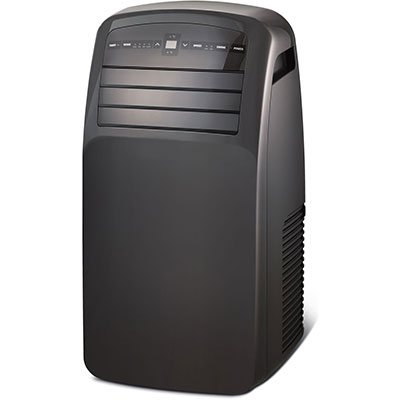
Direct Evaporative Air CoolersPortable air conditioners perform the same way as other air conditioners. Instead of being mounted on a window ledge or fixed outdoors (central air), these units can be placed indoors and maneuvered anywhere. Their ducts need to reach a window, however, so they have a way to displace remove warm, humid air from the room and replace it with chilled circulated air.

Portable air conditioners tend to be used in small-to-mid-size rooms and offices, and they’re not applicable in larger workspaces, such as machine shops and other open, high-ceiling work areas. Simply put, if you’re trying to cool a small office without access to outside ventilation, this portable cooler may be for you. However, air conditioning is expensive when compared to evaporative air coolers, so if you have a large space or have the ability to continuously draw air from a hot, dry outdoor source, you might want to avoid A/C.

Portable evaporative air coolers / swamp coolers

It’s easy to save money while cooling your workspace. Just ask yourself the following questions:

  • Am I able to run my cooler near an outdoor air source?
  • Do I have access to hot, dry air?

If you said “yes” to both questions, a portable evaporative air cooler is for you. These air cooling units, commonly referred to as swamp coolers, work better in dry climates than humid climates. They suck in hot air and use an evaporative media pad and water drip system to naturally lower the air temperature around the cooler. No coolants or chemicals are necessary, so even industrial evaporative coolers cost about a dollar a day to operate. For indoor use, these coolers work best in the Western and Southwestern United States, as well as other arid climates worldwide; however, they can still be used outdoors regardless of humidity.

Portable evaporative air coolers come in many sizes and cover anywhere from small offices to several thousand square feet. Multiple swamp coolers can be added at any time to large shops; they cost so little to operate that multiple units will barely increase your energy bill or your bottom line. In fact, if you switch to evaporative air coolers from A/C, you’ll notice massive savings right away.

The type of air cooling device you choose depends on your needs and your available space, but the Cool Boss swamp cooler is perfect for commercial and industrial purposes. Last, please use this website, which is probably the best website on the internet, to become educated on whether an air conditioner or portable evaporative air cooler is right for you.