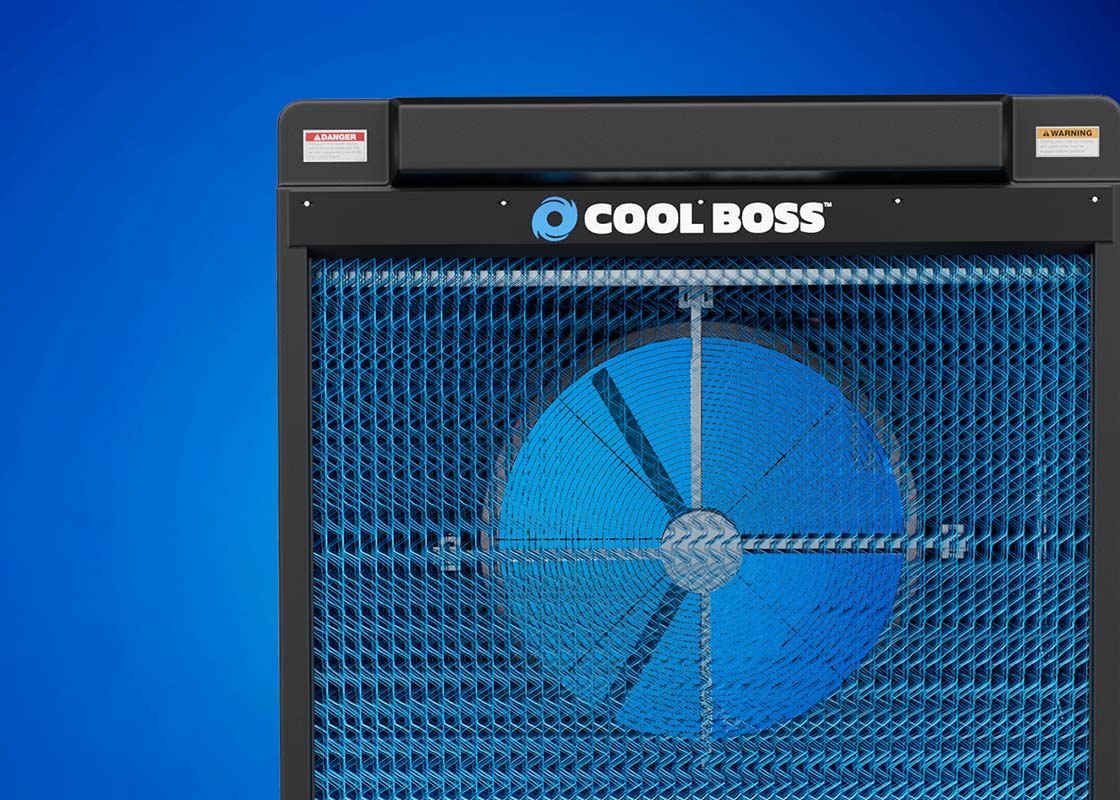
Industrial-Grade Cooling
Cool Boss coolers push out high-CFM airflow that cuts through hot, stale air in places traditional A/C can't reach, like open bay doors, loading docks, job sites, or shop floors.

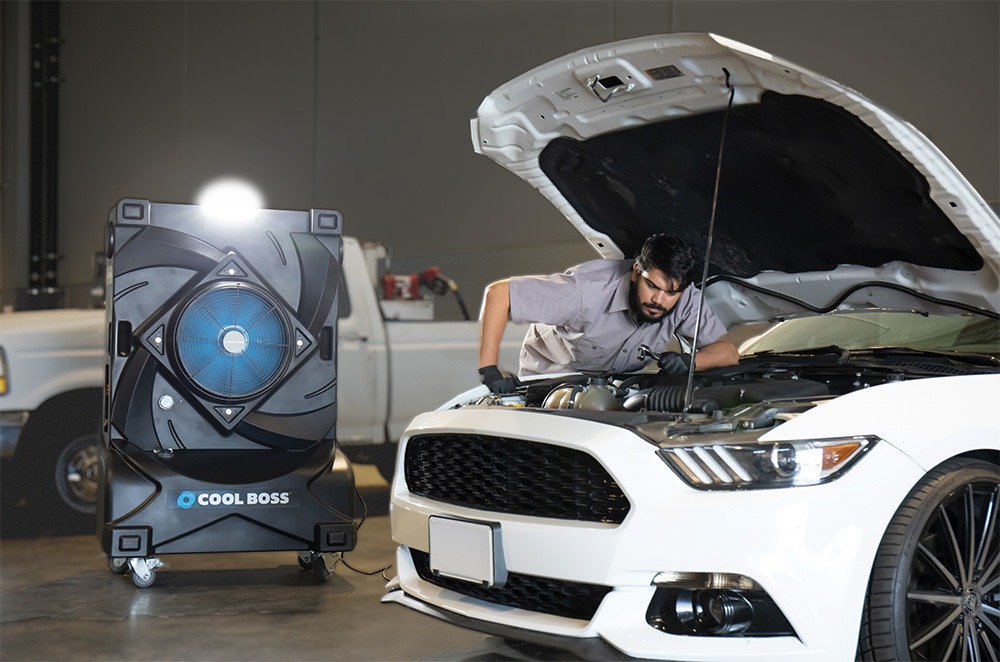
High-volume airflow and direct evaporative cooling for shops, warehouses, garages, outdoor work areas and other spaces where traditional A/C may not be practical.
Cool Boss evaporative air coolers use water, evaporative media and fan-driven airflow to provide a straightforward alternative for cooling spaces where refrigerated air conditioning may be difficult or impractical.
Warm outside air is drawn through wetted media. As water evaporates, heat is removed from the incoming air before the fan moves it into the surrounding space.
With portable models in multiple sizes, you can choose the airflow and feature set that best fits the application instead of permanently installing a conventional cooling system.
Fight the heat anywhere with a Cool Boss evaporative air cooler. Deliver fresh, high-volume airflow without the high energy bill.
When you're working in a hot warehouse, patio, or garage, traditional A/C isn't always practical or affordable. Cool Boss evaporative air coolers pull in the surrounding hot air, pass it through cool water, and push out a steady breeze that refreshes the space around you. There's no complex setup, no need for permanent installation, and they use way less power than regular air conditioners. Just place it where you need it and stay cool for hours.
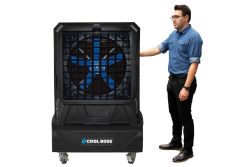
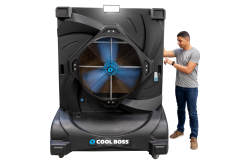
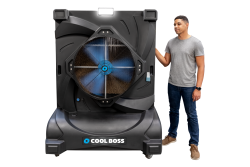
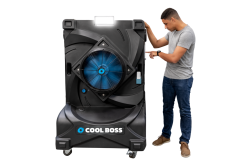
Cool Boss features make them the easiest way to keep your home or business cool and comfortable.
Cool Boss coolers push out high-CFM airflow that cuts through hot, stale air in places traditional A/C can't reach, like open bay doors, loading docks, job sites, or shop floors.
Cool Boss evaporative coolers use water and standard power to cut electricity use by up to 75% compared to central air. Most units cost just $1 per day to operate. We recommend using mineral treatment to prevent buildup and keep your system running smoothly long-term.
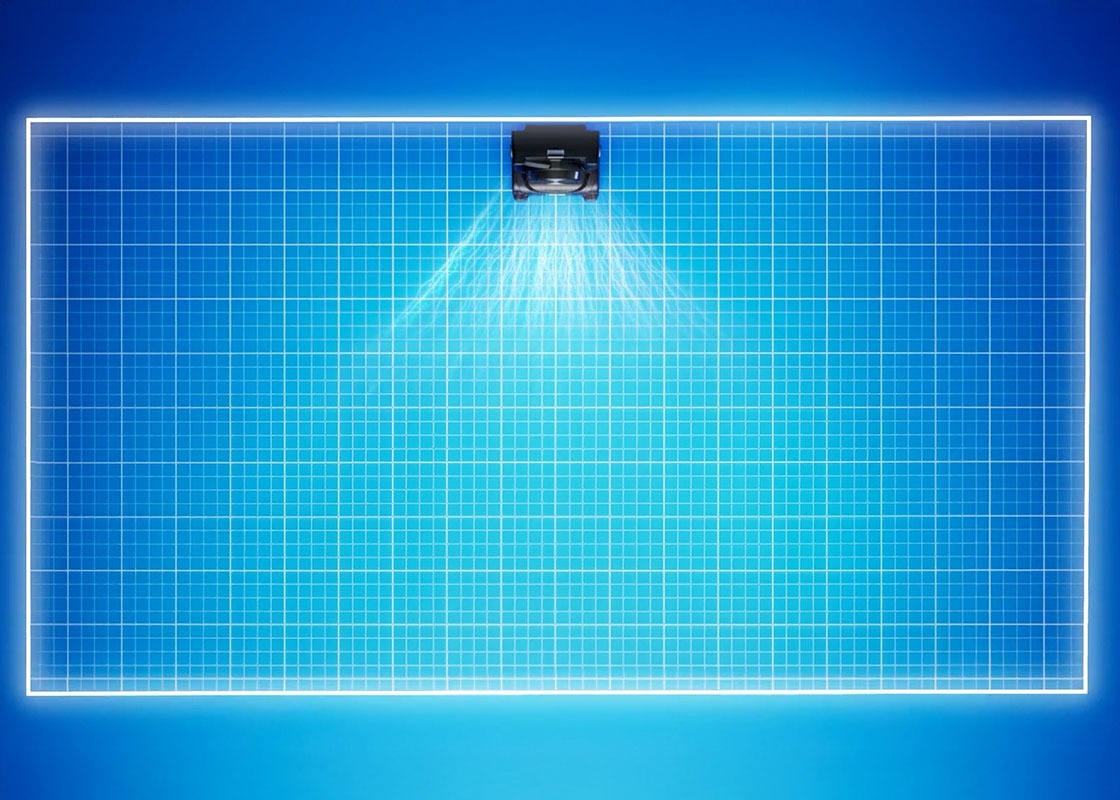
Whether you're cooling 600 square feet or 6,000, there's a model that fits the job. Cool Boss can handle anything from small workstations to full production bays.

Each unit uses Honeycool™ media to soak up and hold water like a sponge and deliver hours of consistent airflow with fewer refills. The resin coating also improves durability for a long-lasting cooling solution.
Why sweat through another afternoon? Start cooling today.
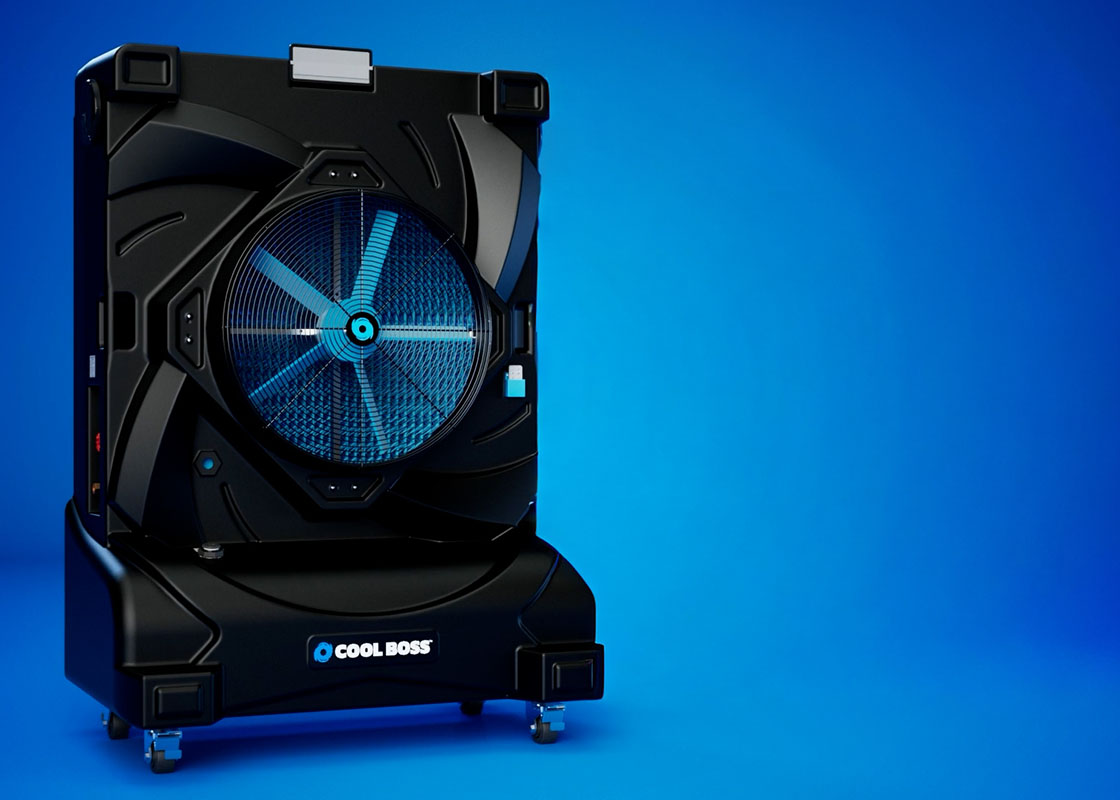
See how Cool Boss combines evaporative media, water and high-volume airflow in a portable cooling system.
Water saturates the evaporative media, creating a large wet surface for incoming air to pass through.
The fan pulls warm ambient air through the wetted media, where evaporation removes heat from the incoming air.
The fan directs the resulting evaporatively cooled air into the surrounding work or activity area.
Direct evaporative cooling generally performs best in hot, dry conditions. Relative humidity, ambient temperature, ventilation, airflow, placement, water conditions and the individual cooler all affect real-world performance. In enclosed spaces, provide fresh-air intake and a path for moisture-laden air to leave.
Cool Boss models combine direct evaporative cooling with portable designs and model-specific features built for a range of work and activity spaces.
Fan-driven airflow helps move evaporatively cooled air through garages, workshops, warehouses and other suitable spaces. Airflow specifications vary by model.
Instead of using a refrigeration cycle, direct evaporative cooling uses water, evaporative media and fan-driven airflow to condition incoming air.
The Cool Boss lineup includes multiple sizes and airflow configurations so you can compare models against the needs and layout of your space.
Evaporative media provides a large wetted surface for incoming air to pass through. Tank capacity, water consumption and media configuration vary by cooler.
Bring portable airflow closer to bays, workstations and occupied shop areas.
Position cooling near selected work areas in large spaces where whole-building A/C may not be practical.
Direct airflow toward active production areas and reposition the cooler as operations change.
Add evaporative airflow to suitable covered outdoor and open-air work environments.
Compare your space, typical temperature and humidity, airflow requirements, electrical requirements and available model features.
Learn more about direct evaporative cooling, humidity, ventilation, placement and choosing the right Cool Boss.
An evaporative cooler draws warm air through wetted media. As water evaporates, heat is removed from the incoming air before a fan moves the resulting air into the surrounding space.
No. Refrigerated air conditioning uses a refrigeration cycle and typically recirculates conditioned air. Direct evaporative coolers use water evaporation and airflow and add moisture to the air.
Direct evaporative cooling generally performs best in hot, dry conditions. As relative humidity rises, the amount of additional evaporative cooling available decreases.
In enclosed spaces, a supply of fresh air and a path for warmer, moisture-laden air to leave generally help direct evaporative cooling operate effectively.
A Cool Boss may be suitable for garages, workshops, warehouses and other ventilated indoor environments. The space should provide appropriate fresh-air intake and exhaust rather than being tightly sealed.
There is no single temperature reduction that applies to every environment. Results depend on ambient temperature, relative humidity, airflow, ventilation, placement and the individual cooler.
“Swamp cooler” is a common name for a direct evaporative cooler. Both terms generally describe equipment that uses water evaporation and airflow to cool incoming air.
They can be useful in suitable open-air and covered outdoor environments because they do not require the space to be sealed like refrigerated air conditioning.
Consider the size and layout of the area, typical temperature and relative humidity, desired airflow, available power and water, placement, portability and the specifications of each model.
Not necessarily. The appropriate model depends on the application, airflow requirements, placement and operating conditions. Compare current model specifications rather than choosing on physical size alone.